Canada Cuts Immigration in 2026: What Applicants Should Know
Canada has rolled out a wide set of immigration and labour policy changes starting January 1, 2026, affecting international students, entrepreneurs, skilled workers, and provincial immigration streams. These changes are part of the government’s plan to reshape Canada’s talent landscape, balancing workforce needs with long-term economic strategies.
Here’s a clear look at what’s new and what it means for anyone planning to study, work, or settle in Canada this year.
Planning to Settle in Canada in 2026?
Explore our detailed Canada Immigration Programs to understand the visa requirements and the latest eligibility rules.
Graduate Students Get Easier Study Permit Access
One of the biggest updates for Canada immigration 2026 is that Master’s and PhD students no longer need a Provincial or Territorial Attestation Letter (PAL/TAL) when applying for a study permit.
- Graduate students are not counted under the study permit cap
- PhD applicants may receive faster processing, as quick as two weeks
This simplifies entry for higher degree seekers and makes Canada a more attractive destination for postgraduate education.
Check if you qualify with our Free Canada Eligibility Check.
Canada Pauses New Start-Up Visa Applications
The federal Start-Up Visa program is now closed to new applicants as of December 31, 2025.
- Only founders with a 2025 commitment certificate can apply (deadline June 30, 2026)
- New Start-Up Visa-linked work permits are paused
- A new pilot program for entrepreneurs is expected later in 2026
Alternative provincial entrepreneur programs may still be available. Learn more about Canada Start-Up Visa Options.
Ontario Opens Faster Work Mobility for Certified Professionals
Ontario introduced a new “As of Right” framework for professionals certified in other provinces:
- Start work within 10 business days of credential validation
- Can work up to six months while completing local licensing
This speeds up labour mobility for skilled workers and helps employers fill jobs faster.
Ontario Bans “Canadian Work Experience Required” in Job Ads
From January 1, 2026:
- Employers cannot require Canadian work experience in job postings
- Employers must disclose if AI tools are used in hiring
This expands job access for newcomers and internationally trained professionals.
Alberta Tightens Rules for Rural Immigration Stream
Alberta updated its Rural Renewal Stream:
- Applicants must already live and work in Alberta with a valid permit
- Community endorsements are capped
- Endorsements expire after 12 months
This affects newcomers targeting Alberta’s smaller communities.
What This Means for Canada Immigration in 2026
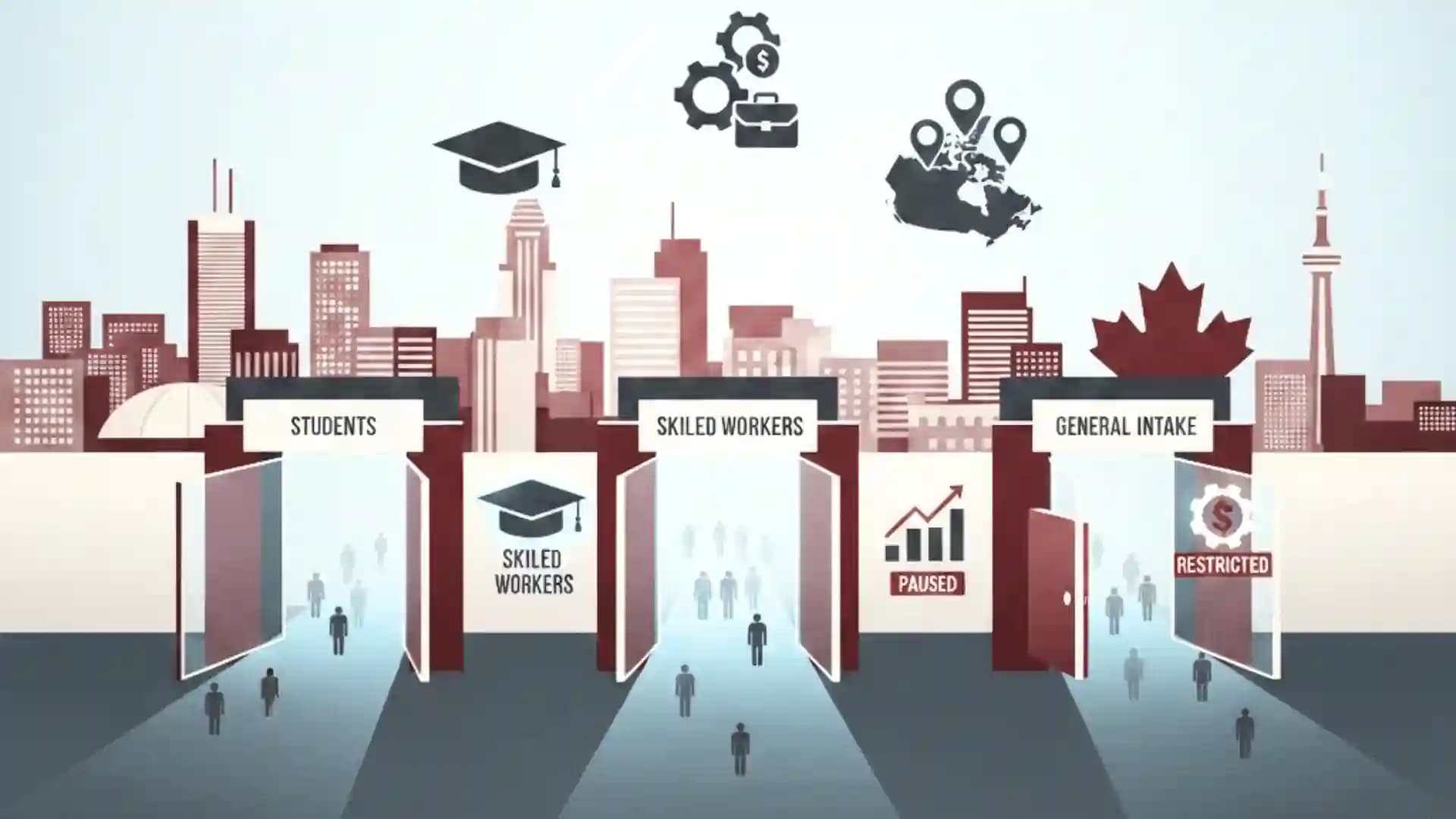
Canada’s immigration system in 2026 is skills-driven and targeted:
- Flexible study permits for graduate students
- Entrepreneur routes pausing and evolving
- Improved labour mobility for accredited professionals
- Fair hiring practices for newcomers
These changes align immigration with workforce needs, economic priorities, and regional growth.